Stinging insect defense across Lucas County addresses distinct structural liabilities between historical architecture and modern residential construction. In neighborhoods like the Old West End and Five Points, high…
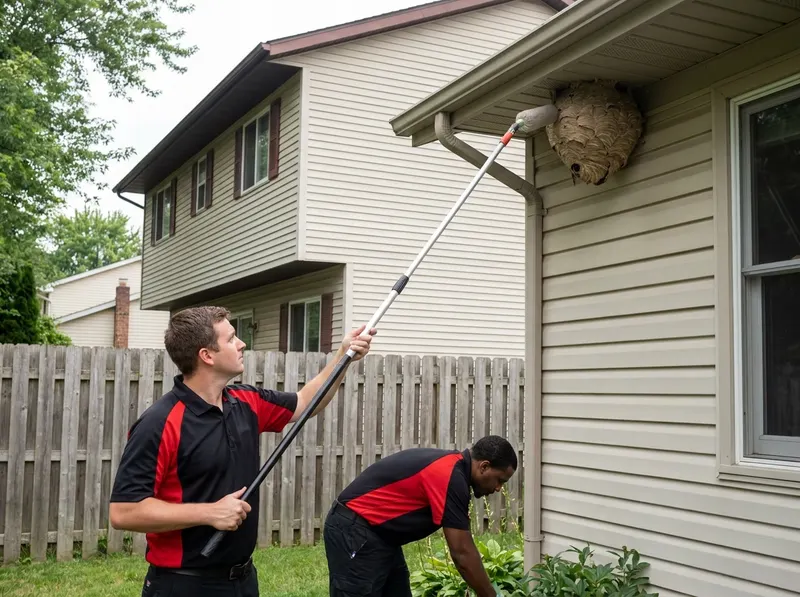
Stinging insect defense across Lucas County addresses distinct structural liabilities between historical architecture and modern residential construction. In neighborhoods like the Old West End and Five Points, high Victorian soffits, multi-tiered rooflines, and unsealed lap siding provide elevated harborage for bald-faced hornet aerial cartons and aggressive yellowjacket colonies. Waterfront microclimates near Point Place and Ottawa along the Ottawa River sustain elevated insect populations due to high ambient moisture and dense tree canopies, which drive hornets toward dry, sheltered overhangs and boat docks. Properties in West Toledo, South End, Beverly, and Reynolds Corners frequently experience ground-nesting yellowjackets infiltrating lawn voids and subterranean root systems near outdoor living spaces.
Targeted physical nest extraction is selected when a visible, paper-carton nest hangs exposed on branch canopies, porch ceilings, or shed gables. Conversely, concealed wall-void injections are required when yellowjackets exploit weep holes, window frame gaps, or roof flashing in homes across Birmingham and South End. The technical trade-off between exterior aerosol knockdowns and dust barrier injection centers on colony architecture: surface spraying agitates concealed hornets and drives them deeper into living quarters through drywall seams, whereas pressurized micro-capillary dust settles across the flight corridor, neutralizing workers and the queen within 24 to 72 hours without interior disruption.
Treatment execution follows three direct steps. First, technicians establish a perimeter safety boundary and identify flight patterns to locate primary entry points. Second, specialists apply targeted, non-repellent residual compounds or micro-aerosols directly into the nest core rather than broadcasting broad chemical sprays across the yard. Third, accessible structural nests are detached, bagged, and removed from the property, followed by the application of an exterior repellent barrier to prevent secondary colonies from utilizing the same harborage scent trail. Single-treatment services resolve the immediate biological hazard without binding the property owner to recurring monthly service contracts.
Every job gets a firm, written price after a free on-site visit.
Tell us about your stinging insect and hornet removal job in Toledo and we'll send a clear, written quote, usually the same day.
 Jorvian Pest Management