Thermal structural remediation neutralizes Cimex lectularius populations by circulating heated air via high-output industrial heaters and calibrated axial fans, sustaining a lethal threshold between 122°F and 135°F…
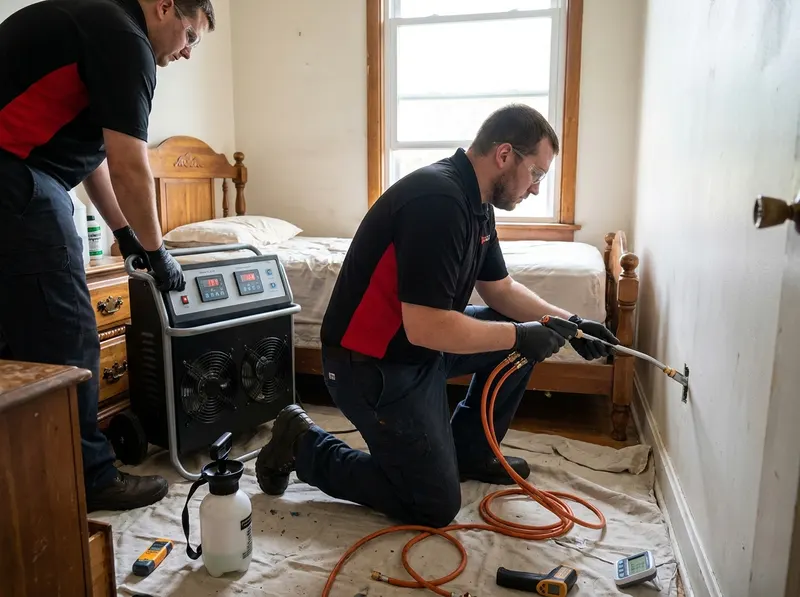
Thermal structural remediation neutralizes Cimex lectularius populations by circulating heated air via high-output industrial heaters and calibrated axial fans, sustaining a lethal threshold between 122°F and 135°F throughout wall cavities, trim moldings, and furnishings. Thermal applications eradicate nymphs and adults within minutes of exposure while desiccating heat-resistant eggs that withstand over-the-counter insecticides. For properties with severe clutter, uninsulated exterior perimeters, or common wall sharing, such as turn-of-the-century wood frames in the Old West End, brick duplexes near Five Points, or riverfront cottages in Point Place, heat alone can encounter thermal sinks. In these environments, applying a targeted chemical barrier along structural migration paths prevents pests from escaping into adjoining rooms, subfloors, or shared plumbing chases.
Selecting between thermal remediation and localized chemical application depends on layout and timeline requirements. A thermal heat treatment serves single-family residences in West Toledo or Reynolds Corners that require complete single-day clearance without discarding personal property. The operational trade-off involves preparation rigor: heat-sensitive items including aerosol cans, vinyl records, prescription medications, wax candles, and volatile electronics must be cataloged and protected or removed before thermal introduction. Conversely, targeted chemical programs require less pre-treatment relocation and fit budget-restricted single-room isolations, but they depend on sequential applications spaced 10 to 14 days apart to intercept newly hatched eggs as chemical residuals take effect.
Structural variations across Lucas County dictate specific protocol adaptations. Historic multi-story residences near the Toledo Museum of Art and wood-framed properties in the South End feature deep lath-and-plaster wall cavities that retain cool pockets, requiring auxiliary electric heat ducting to ensure core wall temperatures reach eradication points. In dense multi-family layouts near Birmingham and Beverly, technician protocol includes placing monitoring sensors along party walls to confirm perimeter barrier containment. Property owners are provided direct clearance protocols, pre-treatment checklists, and transparent pricing with no mandatory ongoing monthly subscription requirements.
Every job gets a firm, written price after a free on-site visit.
Tell us about your bed bug thermal and chemical remediation job in Toledo and we'll send a clear, written quote, usually the same day.
 Jorvian Pest Management