Rodent activity in Lucas County intensifies along the Maumee River and older urban corridors where aging architecture meets shifting seasonal temperatures. Properties in the Old West End, Five Points, and Point Place…
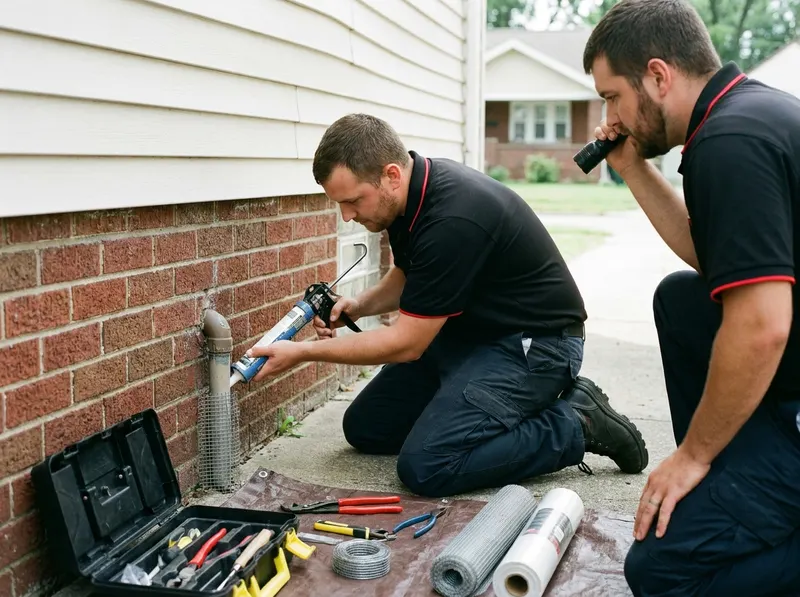
Rodent activity in Lucas County intensifies along the Maumee River and older urban corridors where aging architecture meets shifting seasonal temperatures. Properties in the Old West End, Five Points, and Point Place frequently experience foundation settling and brick-to-sill separation, allowing mice to enter through 1/4-inch breaches and rats through 1/2-inch gaps. Retail bait stations place poison inside living areas without sealing access points, leaving dead rodents inside wall cavities and encouraging fresh colonies to enter through open sill plates. Professional defense physically shuts these access points using 16-gauge galvanized steel mesh, copper mesh packing, and metal flashing along corner caps, plumbing penetrations, and crawlspace vents before starting mechanical eradication.
Eradication strategy depends on structural architecture and crawlspace design. Full basement foundations common throughout South End, Beverly, and West Toledo require exterior perimeter sealing combined with interior snap traps anchored in non-living utility zones. Slab-on-grade homes in Reynolds Corners or Ottawa typically present entry vulnerabilities at attached garage door sweeps and air conditioning line sets, where exterior rodent exclusion provides the highest return on investment. If an infestation is localized to an attic or unfinished utility room, mechanical trapping eliminates the breeding population in 7 to 14 days; if the building envelope has multiple masonry gaps near Ottawa Park or the Ottawa River, comprehensive physical exclusion is mandatory to prevent continuous seasonal re-infestation.
The mechanical process follows a three-step protocol to secure the interior envelope. First, an inspector surveys the foundation, roofline transitions, crawlspace hatches, and utility penetrations to mark active rodent pathways and rub marks. Second, technicians seal all identified exterior openings with gnaw-proof materials, denying rodents access to insulation and wall voids. Third, technicians place covered, locked interior capture traps to eradicate the remaining population inside the perimeter. Follow-up visits clear capture stations at 3- to 7-day intervals until zero activity is detected, maintaining complete structural defense without binding property owners to long-term monthly service contracts.
Every job gets a firm, written price after a free on-site visit.
Tell us about your rodent exclusion and eradication job in Toledo and we'll send a clear, written quote, usually the same day.
 Jorvian Pest Management